
Guest Talk: Bojana Stefanovic
Dr. Bojana Stefanovic, Sunnybrook Health Sciences Centre, Toronto, Canada, is visiting Aarhus and will give a Guest Talk on: "Decoding Brain Resilience: How Neuronal and Cerebrovascular Networks (Mal)adapt in Alzheimer's Disease Pathology and after Brain Trauma".
Info about event
Time
Location
1231-424 Lille Anatomisk Auditorium, Aarhus University
Organizer
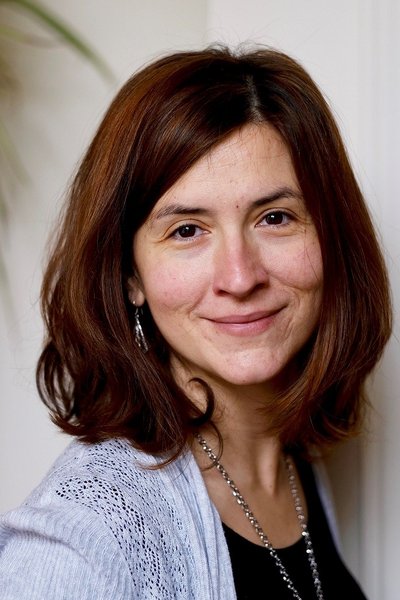
Bojana Stefanovic
Title: Decoding Brain Resilience: How Neuronal and Cerebrovascular Networks (Mal)adapt in Alzheimer's Disease Pathology and after Brain Trauma
About Dr. Stefanovic:
My research focuses on the development of new methods for quantitative in situ imaging of brain function, aimed at furthering our understanding of both normal function and the mechanisms underlying the disturbances in the signaling between neurons, astrocytes, and vessels in stroke, Alzheimer’s disease, and trauma. To this end, we use quantitative high field magnetic resonance imaging, two-photon fluorescence microscopy, and intracerebral electrophysiology. We employ these assays to elucidate changes in brain function in the peri-infarct tissue following focal ischemia; amyloid-dependent changes in neuronal activity and cerebrovascular function over the Alzheimer’s Disease progression; and the neurovascular impairment following repeated traumatic brain injury.
TITLE:
Decoding Brain Resilience: How Neuronal and Cerebrovascular Networks (Mal)adapt in Alzheimer's Disease Pathology and after Brain Trauma
ABSTRACT:
In the search for more effective management strategies for Alzheimer’s disease and post-concussive syndrome, understanding why some individuals successfully adapt while others experience persistent dysfunction and decline remains a central question. Our laboratory investigates these variable outcomes by examining how Alzheimer's pathology and traumatic brain injury impact the brain's complex neuronal and cerebrovascular networks. In this talk, I will introduce the advanced cellular-scale imaging and computational tools we use to map these networks’ function in situ, followed by a discussion of our two major research directions:
- Cognitive Resilience in Alzheimer's Disease: To determine how some individuals maintain cognitive function despite significant neuropathology, we studied an advanced transgenic rat model (TgF344-AD) exhibiting amyloid plaques, tau pretangles, neuronal loss, and progressive cognitive decline. By analyzing underlying neuronal activity with high-density electrophysiological recordings and relating them to cognitive performance, we identified distinct excitatory and inhibitory signaling patterns that preserve cognition even in advanced stages of disease.
- Concussion Recovery and Chronic Stress: To address why chronic stress exacerbates post-concussive outcomes, we evaluated neurovascular coupling across microvascular networks in a mouse model of repeated concussion combined with stress. We found that comorbid trauma and stress chronically disrupt functional coordination between brain capillaries and blunt arterial reactivity.
Together, these findings demonstrate that evaluating cellular cooperativity across neuronal and brain vascular populations provides a highly sensitive biomarker for assessing homeostatic maintenance and recovery. Ultimately, these population-level signatures of brain resilience vs. susceptibility to injury may be used in the development of new interventions for improving clinical trajectories in patients affected by neurodegeneration and trauma.
ALL ARE WELCOME.
Contact
Associate Professor Eugenio Gutierrez
eugenio@cfin.au.dk
+4578469936